WordPress Meetup Tokyo -- WordPress Server Optimization
I recently gave a quick talk about how I use Nginx, HHVM, MariaDB with WordPress on this blog at the March WordPress Meetup in Tokyo. Here are the slides: I've published a Vagra...

I recently gave a quick talk about how I use Nginx, HHVM, MariaDB with WordPress on this blog at the March WordPress Meetup in Tokyo. Here are the slides: I've published a Vagra...
In my quest for faster response times and page load speed, I've been playing around with Google's SPDY. I finally got around to getting a SSL certificate for this website and in...
Update 2014/4/24 : I've updated the template to work with the latest HHVM 3.0+, and also squished some bugs. I've been talking quite a bit about WordPress on HHVM recently, and...

Update 2014/4/17 : This site now runs WordPress 3.9, which seems to be working fine with HHVM. Also, compatibility has improved, thanks to a patch in the WordPress core specific...
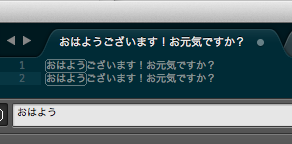
I really like Sublime Text. Today, I like it even more. Thanks to a blog post by Uesugi Shu, this long-open bug regarding Japanese character input has a viable workaround! The l...

So, I'm making some changes to this blog. I'll start with the first, which is most obvious. I've decided to change the theme I've been using for 2 years to Expound by Konstantin...
The ease of making a WordPress theme is both a blessing and a curse. It allows people to get started with programming relatively easy -- most hosting providers have PHP / MySQL,...
Ruby 2.1 is coming soon! Personally, I've noticed quite a few speedups, and it seems like they've fixed a large memory problem I was running in to on pre-release staging environ...
I have been a proponent of pre-commit hooks for a very long time. After doing some searching, I found this lovely gem. It consists of a bunch of checks before you commit your co...
Rails Turbolinks is pretty cool, right? I thought it would be pretty cool to use it on WordPress, too. There are probably a lot of bugs, and it probably doesn't work well with J...
WordPress 3.7 was just released. Although there are quite a few features in this release, I want to talk about what I feel is the most important feature: automatic updates . It'...
I've been playing around with Vagrant recently. It really is a great tool for setting up development environments quickly and cleanly - no more local MySQL databases with 100 se...
Snoopy Snoopy is a bookmarklet for snooping on web pages. It's intended for use on mobile browsers (such as Mobile Safari on the iPad) where you can't view-source to poke around...
Search: Replace:
If you aren't familiar with Marshal.dump and Marshal.load , you probably should be. It's used to serialize Ruby objects into binary data - mostly caching. Now, if you're trying...
I've come across too many Rails apps with the secret token in version control. Don't do that.
Just writing to let you know that I've switched servers for this blog! I've been meaning to get this on to a faster server that I have control over for awhile, and I finally got...
One of the things that I've built regularly are custom WordPress themes for clients. Let me clarify -- a custom theme for each client. One theme per client. So, I decided to try...
What do you do when you have a Facebook app tab (inside an iframe , mind you) that's externally linkable? Pop-in. Let's break this down. This conditional will be true when the b...
There have been more than a few times where someone needs to send a big file to me. So, I made a quick and dirty tool to allow anyone to upload files directly to a S3 bucket. No...